
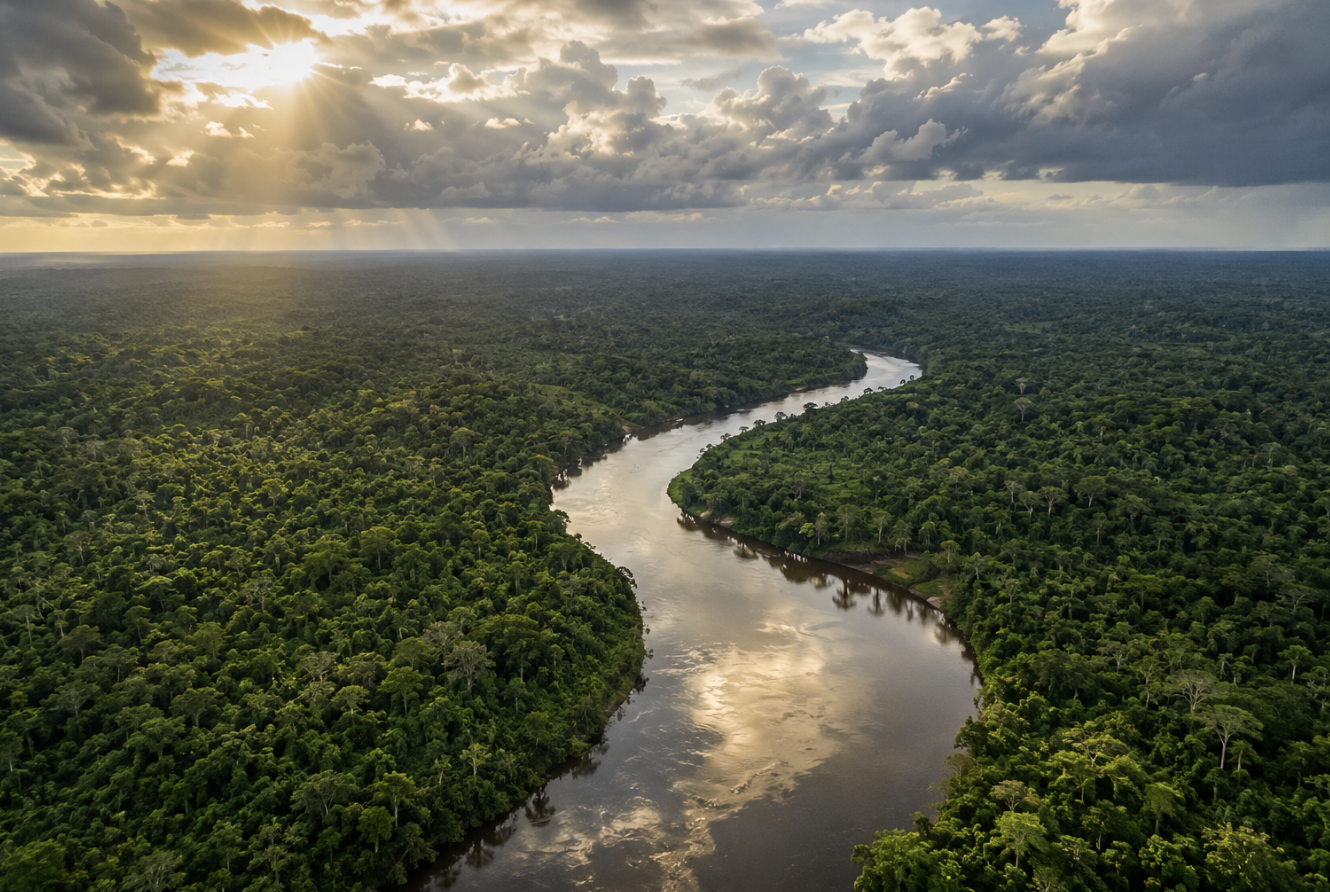
For generations, Indigenous communities in the Amazon have accumulated knowledge about plants, medicine, agriculture and the natural world through observation and experience.
Today, scientists are increasingly studying knowledge those communities have carried for centuries—raising an interesting question for journalists: Whose expertise do we recognize when we tell a story?
That question emerged from American Community Media’s recent news briefing, “Ancient Wisdom, Modern Science: Dr. Rosa Vásquez Espinoza on Saving the Amazon Rainforest,” featuring Peruvian chemical biologist, National Geographic Explorer and Amazon Research Internacional founder Dr. Rosa Vásquez Espinoza. Her work combines scientific research with ancestral Amazonian knowledge to study biodiversity, medicine and conservation.
“I feel like in a way modern science is catching up with ancestral knowledge,” Vásquez Espinoza said.
She explained that traditional knowledge can involve processes similar to the scientific method—observing the natural world, asking questions, testing what works and passing those lessons from one generation to another.
Her research into stingless bees offers an example. During the COVID-19 pandemic, Indigenous communities in different regions told Vásquez Espinoza they were relying heavily on stingless bee honey to treat symptoms associated with infection. Rather than accepting those claims as scientific fact, the information became a question to investigate.
“And so they wanted to know what was the science behind this,” she said.
Her team subsequently conducted chemical testing of the honey in Peru.
For journalists, the distinction is important. Listening beyond traditional sources does not mean abandoning verification. It means recognizing that valuable knowledge, questions and perspectives may exist outside the institutions reporters traditionally call first.
That point is particularly relevant for journalists serving communities that have historically been overlooked or spoken about rather than listened to.
During the briefing, moderator Pilar Marrero noted that many participating journalists serve immigrant and multicultural communities across the United States and asked what lessons from the Amazon could apply in cities including Houston, Los Angeles, Chicago and New York.
Vásquez Espinoza pointed to resilience, community and the willingness of Amazonian communities to rebuild trust despite histories of displacement and mistreatment. She described communities focused not only on their lives today, but on opportunities for generations still to come.
For journalists, perhaps the broader takeaway is just as simple: good reporting still demands evidence, scrutiny and verification. But it also requires curiosity—and a willingness to consider whether the people closest to a story may possess knowledge worth hearing.