
HOUSTON — When disaster strikes, information can be just as critical as food, water or shelter.
But emergency management leaders say today’s challenge isn’t a lack of information—it’s ensuring people recognize and act on trusted information amid the constant flow of messages competing for their attention.
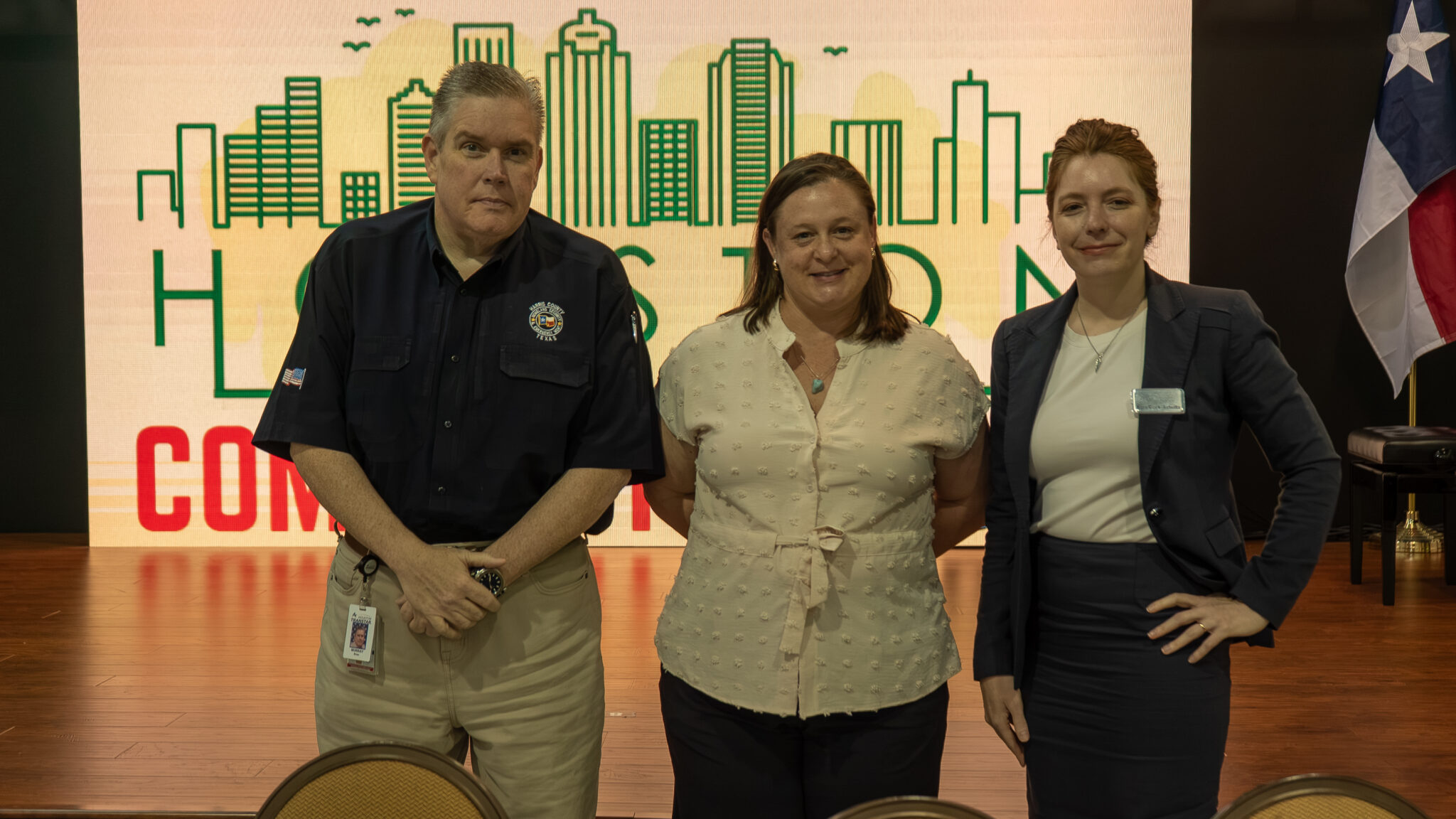
That message resonated throughout Houston Community Media’s “Hope for the Best, Plan for the Worst — Disaster Preparedness” briefing, where emergency managers, nonprofit leaders and journalists explored how trusted community media can help close the information gap before, during and after disasters. The discussion reinforced the vital role journalists play in helping residents navigate emergencies with accurate, timely and actionable information.
Bryan Murray, deputy director and public information officer for the Harris County Office of Homeland Security & Emergency Management, said emergency agencies have no shortage of ways to communicate. Instead, the challenge is breaking through the constant stream of messages competing for the public’s attention.
“The biggest issue that we have right now is the public is oversaturated with information,” Murray said. “The information was out there from official sources telling you this is what’s going to happen. And here’s what you need to do. And this is when you need to do it.”
That reality, Murray said, makes local journalism more important than ever. Encouraging media organizations to subscribe to Harris County’s emergency notification system and regularly share verified preparedness information with their audiences, he said, “The more media that subscribes to those, and the more you share that information with your readers, your viewers, your listeners, the more prepared our community gets. You guys are the linchpin in public information.”
Brooke Campbell, director of community outreach and disaster recovery at United Way of Greater Houston and co-director of the Greater Houston Disaster Alliance, echoed that message, explaining that trusted community and ethnic media often reach audiences that traditional communication channels cannot.
“We fully recognize and understand that it’s you all who have the trust of your audiences,” Campbell said. “There’s no reason that we can’t come together and ensure that the right messages are getting into the hands of the audiences you’re trying to reach.”
Campbell said the Greater Houston Disaster Alliance continues working with government agencies, nonprofit organizations, researchers and media partners to strengthen disaster communications across the region. Success, she explained, isn’t measured by how many alerts are issued, but by whether critical information reaches every community through voices residents already know and trust.
Kara Cooke-Schultz, director of disaster recovery and community resilience at the Greater Houston Community Foundation and co-director of the Greater Houston Disaster Alliance, expanded the conversation beyond emergency response, encouraging journalists to continue highlighting preparedness resources and community partnerships long before disasters occur. She also emphasized the importance of sharing information about services available to older adults and people with access and functional needs, noting that awareness before an emergency is just as important as assistance afterward.
The discussion served as a reminder that emergency reporting begins long before severe weather appears in the forecast. Whether it’s explaining evacuation routes, highlighting preparedness resources or connecting residents with trusted organizations, journalists have an opportunity to inform the public before emergencies become headlines.
Murray closed with a challenge that extends beyond emergency management agencies to every newsroom serving the public.
“When we create a message, we’re not creating this message just out of thin air,” he said. “There’s actual social science involved here… It’s not just to tell you that it’s going to rain. It’s actually we’re imploring you to act… They’re not just informational, they’re trying to drive people to action. And the more that you can stress the action piece through your channels, the more successful we’re all going to be in that.”
For members of the Houston Association of Black Journalists, the discussion underscored a responsibility that extends beyond covering disasters. It reaffirmed the profession’s role as a trusted messenger—one capable of building public trust, strengthening community resilience and helping save lives through accurate, actionable reporting before the next emergency arrives.