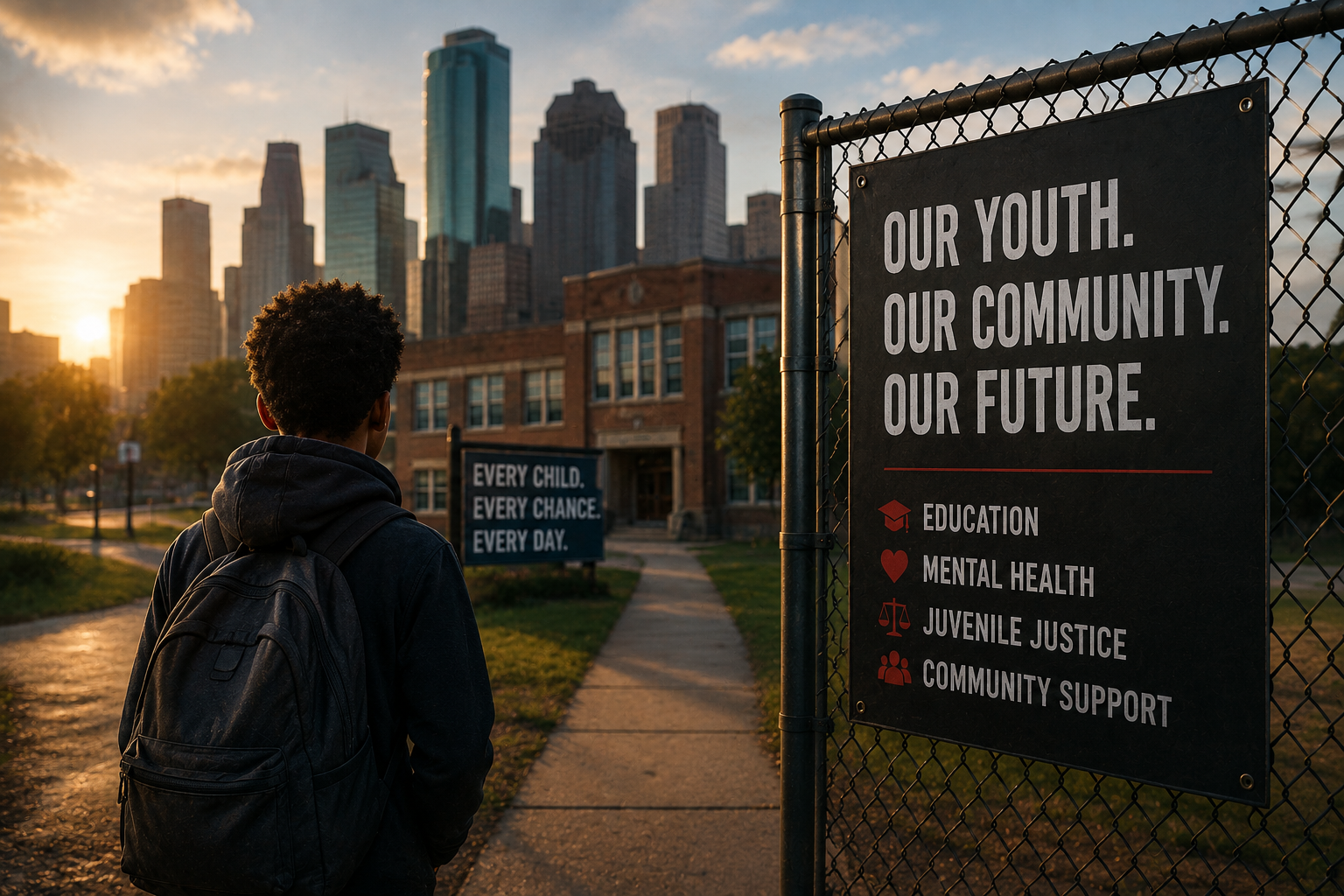
Organization launches three-part interview series examining juvenile justice, education and the future of young Texans.
How do Texas lawmakers view the challenges facing today’s children and teenagers?
That question is at the heart of Houston Community Media’s (HCoM) new three-part interview series, Who Cares About Youth?, which brings state legislators together to discuss issues ranging from juvenile justice and education to mental health and community engagement. The series offers journalists an opportunity to hear directly from policymakers while identifying story ideas that extend well beyond the Capitol.
The first conversation, held June 18, featured State Rep. Gene Wu, who represents House District 137 and serves as vice chair of the House Committee on Criminal Jurisprudence. Drawing on his experience as a former Harris County prosecutor, Wu described juvenile justice as part of a much larger conversation about education, family support, mental health and early intervention.
Rather than focusing exclusively on what happens after a young person enters the justice system, Wu encouraged listeners to consider the conditions that shape children’s lives long before they reach a courtroom.
“I saw prosecutors and defense attorneys and judges working together to fix what is wrong with the child, and not just say, ‘How much can we punish this child for acting the way that they did?'” Wu said.
Throughout the discussion, Wu repeatedly returned to rehabilitation as the guiding principle of juvenile justice.
“The word is rehabilitation,” he said. “Every single thing that we do in a state by law should and must go towards rehabilitation.”
More Than One Story
For journalists covering education, criminal justice, public policy or community affairs, Wu’s interview highlighted several reporting threads that reach far beyond a single legislative discussion.
Among them were the relationship between school discipline and juvenile justice, access to mental health resources, the role of counselors and early intervention, and how community support systems influence outcomes for young people. Those themes surfaced repeatedly throughout the conversation and offer opportunities for continued reporting at the local level.
The discussion also underscored the importance of moving beyond legislative debate to examine how these issues are experienced in neighborhoods, schools and community organizations.
Continuing the Conversation
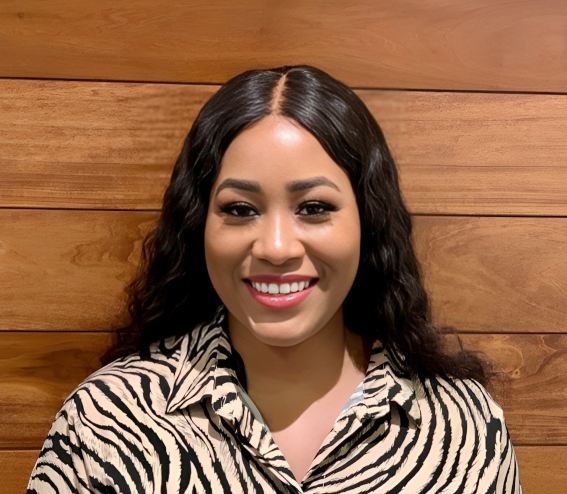
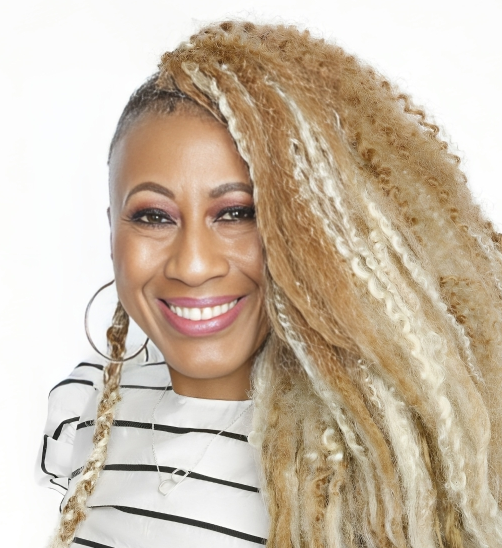
The series continues with interviews featuring State Rep. Jolanda Jones and State Rep. Penny Morales Shaw, each bringing a different perspective to the question posed by the series: Who cares about youth?
Taken together, the conversations are expected to provide journalists with a broader understanding of the policy decisions, community challenges and public concerns shaping the lives of children and teenagers across Texas.