
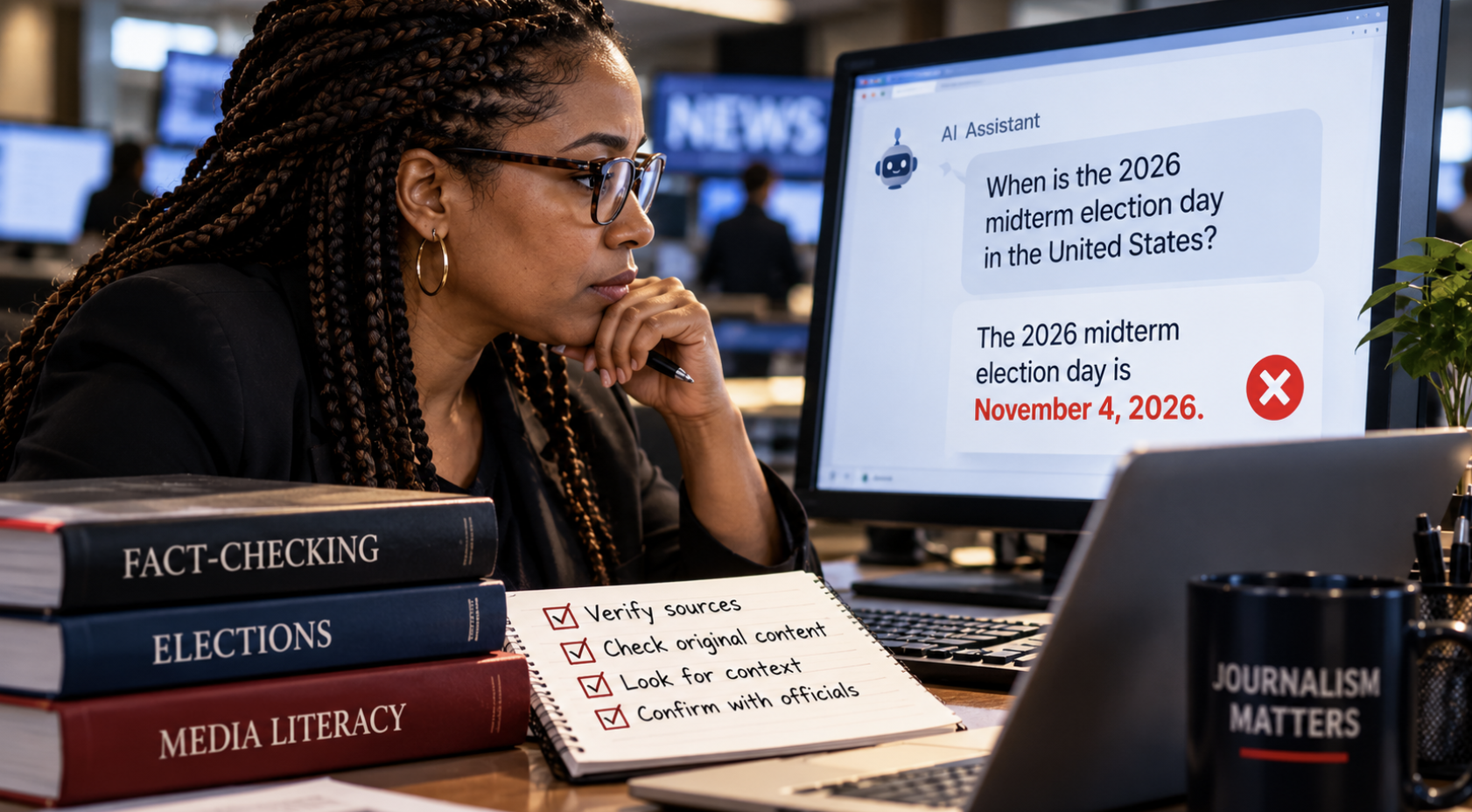
An artificial intelligence chatbot confidently tells a voter that Election Day is Nov. 4. The answer sounds authoritative, but it is wrong.
The correct date is Nov. 3.
That example was among the concerns raised during an Oct. 23 national news briefing hosted by American Community Media, where experts examined how election misinformation spreads through AI platforms, social media and private messaging networks.
The discussion, titled Who Gets the Last Word? Election Disinformation in Immigrant Communities, highlighted the importance of reliable information as voters prepare for the midterm elections.
Laura Zommer, co-founder and CEO of Factchequeado, cited research by the Institute for Strategic Dialogue showing that approximately 30% of AI chatbot responses to election questions in English were incorrect, incomplete or outdated. That figure rose to 45% for questions asked in Spanish.
Zommer said Meta’s chatbot twice provided the wrong election date when questioned in Spanish, illustrating the potential consequences of relying on AI-generated answers without independent verification.
False Images, Real Concerns
Cameron Hickey, CEO of the National Conference on Citizenship, discussed fabricated images depicting immigration enforcement agents intimidating voters at polling locations.
Although the images were not authentic, Hickey warned that they could heighten fears among immigrant communities and discourage eligible voters from participating.
Jinxia Niu of Chinese for Affirmative Action described similar challenges within Asian immigrant communities, where misleading claims about citizenship, voter eligibility and immigration enforcement circulate through Chinese-language social media networks.
Niu said her organization has identified more than 150 accounts associated with disinformation in the Chinese-language information environment.
The findings demonstrate how misinformation can reach audiences through different languages and platforms, complicating efforts to correct false claims.
How to Verify What You See
Hickey recommended the SIFT method, developed by information literacy researcher Mike Caulfield, as a practical approach to evaluating questionable information.
- Stop: Pause before sharing a claim.
- Investigate the source: Determine who published it and whether the source is credible.
- Find better coverage: Seek confirmation from reliable reporting or official sources.
- Trace the claim: Locate the original statement, image or document to understand its context.
The method applies to journalists verifying material for publication and readers evaluating information they encounter online.
Why Journalism Matters
The briefing reinforced the role of accurate, accessible reporting in helping communities navigate an increasingly complicated information environment.
For journalists, that means verifying AI-generated material, checking original sources and providing context when claims are misleading. For readers, it means questioning information that appears credible but lacks supporting evidence.
Voters should confirm election dates, polling locations and registration requirements through official election offices. In Texas, that information is available through the Texas Secretary of State’s voter information website.
As new technology changes how information is produced and shared, the fundamental responsibility of journalism remains the same: Get the facts right and make them accessible to the public.