
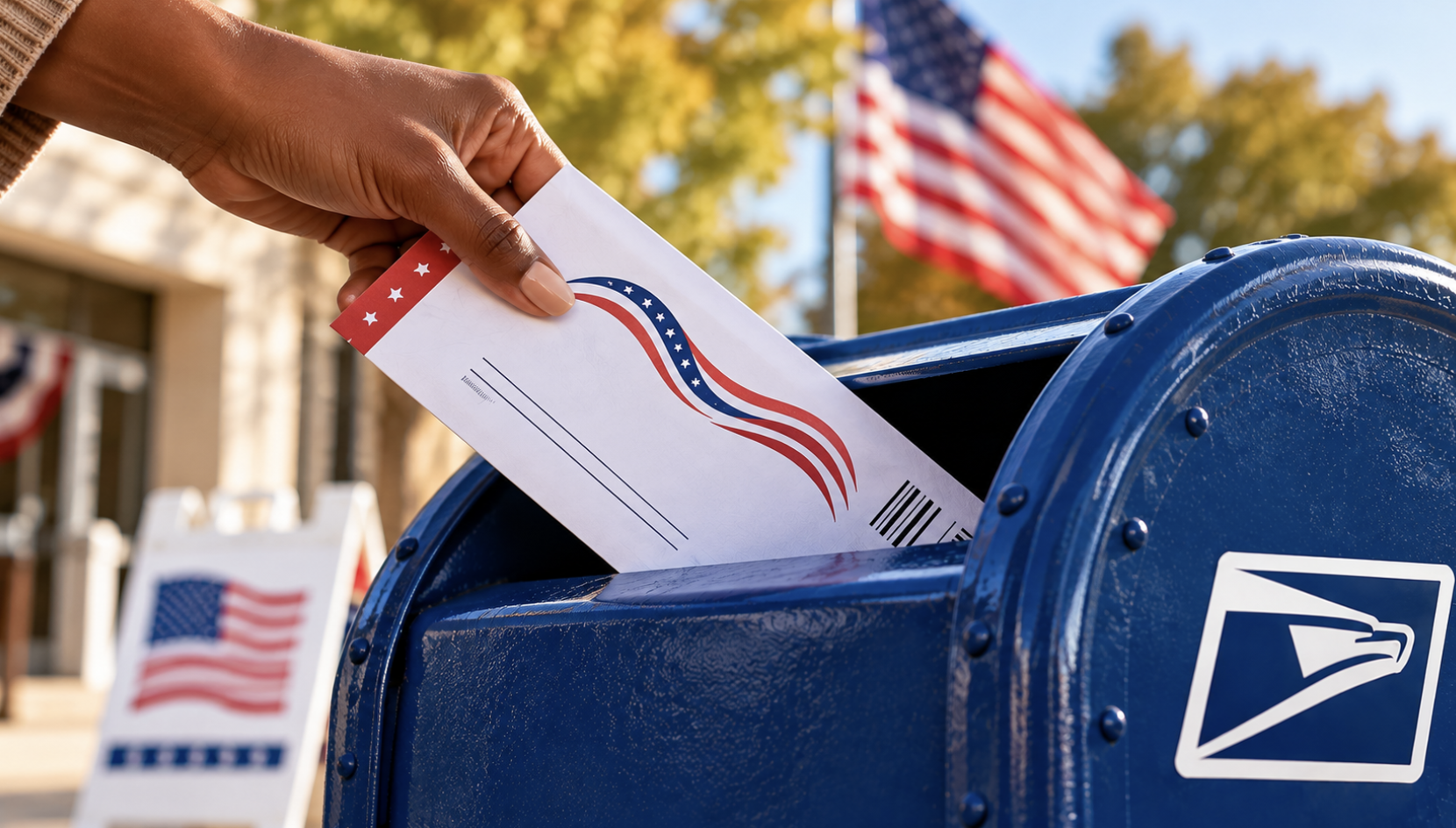
As legal battles over voting rules move quickly through the courts, journalists face a parallel challenge: making sure voters understand what has actually changed — and what has not.
That distinction is particularly important ahead of the Nov. 3 midterm election.
On Sept. 14, the U.S. Supreme Court left in place a preliminary injunction blocking key portions of a new U.S. Postal Service rule governing mail ballots. For the upcoming election, voters can continue using the mail-voting systems already established by their states.
Yet attorneys participating in a Sept. 22 American Community Media briefing said months of litigation and changing proposed requirements have contributed to confusion about whether voting by mail remains available.
The blocked USPS rule would have required election officials to use federally approved ballot envelopes, upload voter information into a new federal portal and use voter-specific barcodes that matched information in that system.
Those requirements will not apply to the November election.
“The new USPS restrictions are blocked,” said Ethan Herrnstein, an attorney with the ACLU Voting Rights Project. “USPS cannot use them to refuse to deliver mail ballots and mail voting remains safe and reliable to use.”
That simple message can become complicated when voters encounter headlines about court challenges, proposed federal rules and other disputes over election administration.
During the briefing, Niyati Shah of Asian Americans Advancing Justice said journalists have an important role in helping voters separate current election procedures from misinformation and confusion.
She encouraged reporters to continue their work “to correct the mis and disinformation and the fear and confusion out there.”
The stakes are particularly significant for communities that rely heavily on mail voting. Speakers identified older adults, people with disabilities, rural residents, students, military and overseas voters, and voters who may need language assistance among those for whom voting by mail can be especially important.
But accurate coverage requires another distinction: mail-voting rules are not identical nationwide.
Eligibility, deadlines, ballot-return procedures, drop-box availability and tracking options vary by state and sometimes by locality. Speakers urged voters to rely on their state and local election officials for the rules that apply where they live.
The Supreme Court’s action also did not permanently resolve the broader legal dispute. The injunction is preliminary, and litigation over the USPS rule is expected to continue.
For journalists covering the midterms, that makes precision particularly important.
The legal fight continues. The proposed USPS requirements are blocked for November. And voters should follow the existing mail-voting rules in their own states.
That may not be the most dramatic headline.
But for voters trying to understand how to cast a ballot, it may be the most important one.