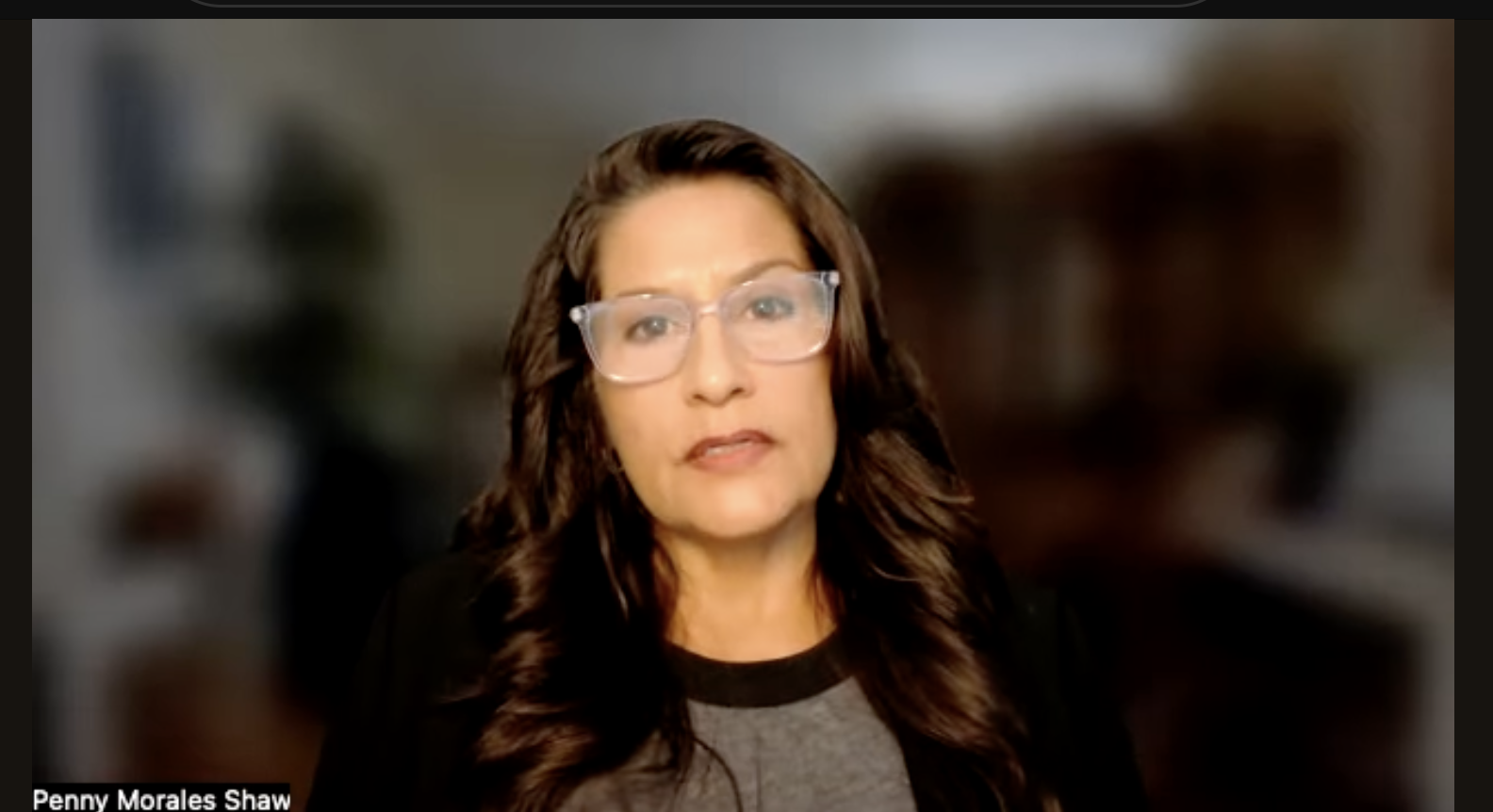
Rep. Penny Morales Shaw: Community Journalism Is a Two-Way Road
By HABJ Staff · July 13, 2026
HOUSTON — Community journalists do more than report the news—they help lawmakers understand what families are experiencing and ensure important policy decisions reach the communities most affected, according to State Rep. Penny Morales Shaw.
Speaking during Houston Community Media’s concluding “Who Cares About Our Youth?” briefing, Morales Shaw described ethnic and community media as an essential bridge between elected officials and the people they represent.
“I think it’s a two-way road,” Morales Shaw said. “We need you to tell us what families are experiencing.”
She said lawmakers also have a responsibility to keep journalists informed about policy decisions that may quietly occur but have significant consequences for local communities.
“We need to keep you informed about these kinds of things that are quietly happening in the background, but very loudly impacting families,” Morales Shaw said.
For Morales Shaw, that relationship extends beyond simply sharing information. She said community journalism creates opportunities for policymakers to hear directly from neighborhoods often overlooked in broader public conversations, while helping residents better understand how decisions made in Austin ultimately affect their everyday lives.
Reporting beyond the headlines
Throughout the discussion, Morales Shaw challenged attendees to look beyond individual headlines and consider the broader issues affecting Texas families.
She described strong families as the foundation for addressing many of the state’s most pressing challenges, including public education, juvenile justice, workforce development and community well-being.
“When you talk about the family, you have to look at bigger picture things like wages, worker safety and foster care,” she said. “Government should be looking at how to strengthen the family unit.”
Drawing from her experience raising four children while balancing a legal career and public service, Morales Shaw said those experiences continue to shape the legislation she pursues and the issues she prioritizes.
Morales Shaw also emphasized the importance of helping communities understand the challenges facing public education.
She pointed to school closures, reductions in after-school programs, pre-kindergarten and tutoring, increased standardized testing requirements and diminished support for special education and dual-language programs.
Teachers, she said, continue to shoulder growing responsibilities while resources decline.
“They’re getting squashed between responsibility and support,” Morales Shaw said. “The responsibilities and burdens right now are much greater than the support they’re finding.”
She added that investing in schools means more than funding classrooms. Counselors, nurses, extracurricular activities and other wraparound services all contribute to helping students succeed academically and personally.
“When you’re spending six to eight hours a day in an institution, you want it to bring value to your child,” she said. “You want it to enhance their abilities and address the shortcomings they may need to get to an equal playing field.”
Morales Shaw also discussed juvenile justice and the importance of addressing challenges before children become involved in the legal system.
She referenced previous legislation aimed at raising the minimum age at which children can be handcuffed and arrested on school campuses, saying early intervention should take precedence over punitive responses.
“If you’re allowing a 10-year-old to be handcuffed on school grounds and be put into a punitive system, that’s already a wrong turn,” she said.
She also addressed recent federal immigration policies and emphasized the importance of ensuring immigrant families understand how policy decisions may affect their daily lives—another area where she said trusted community journalism plays an essential role.
A shared responsibility
As Houston Community Media concluded its three-part “Who Cares About Our Youth?” series, Morales Shaw’s message to journalists was clear: informing the public is more than reporting the news—it’s helping communities understand the issues shaping their future.
For Morales Shaw, strengthening families remains central to that conversation, but she said meaningful change also depends on a strong partnership between policymakers and journalists who are committed to informing the communities they serve.